Homemade, silky, and authentic – just three ingredients and some kneading magic!
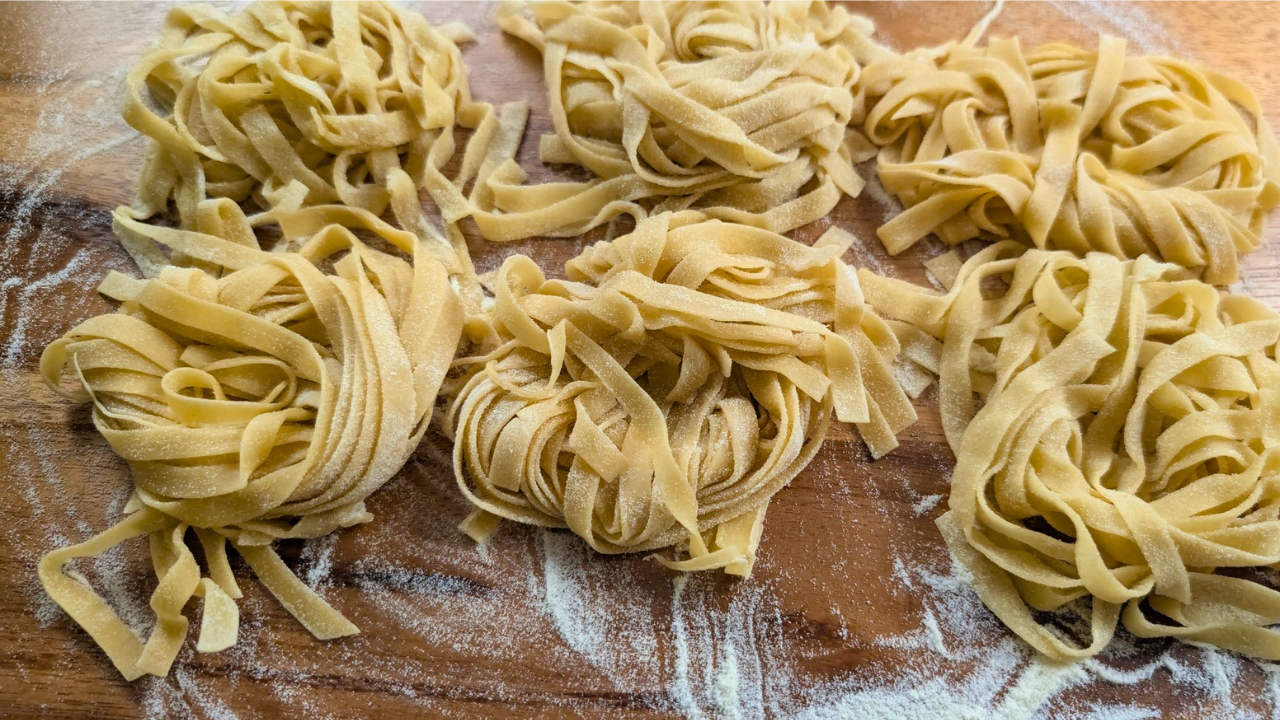
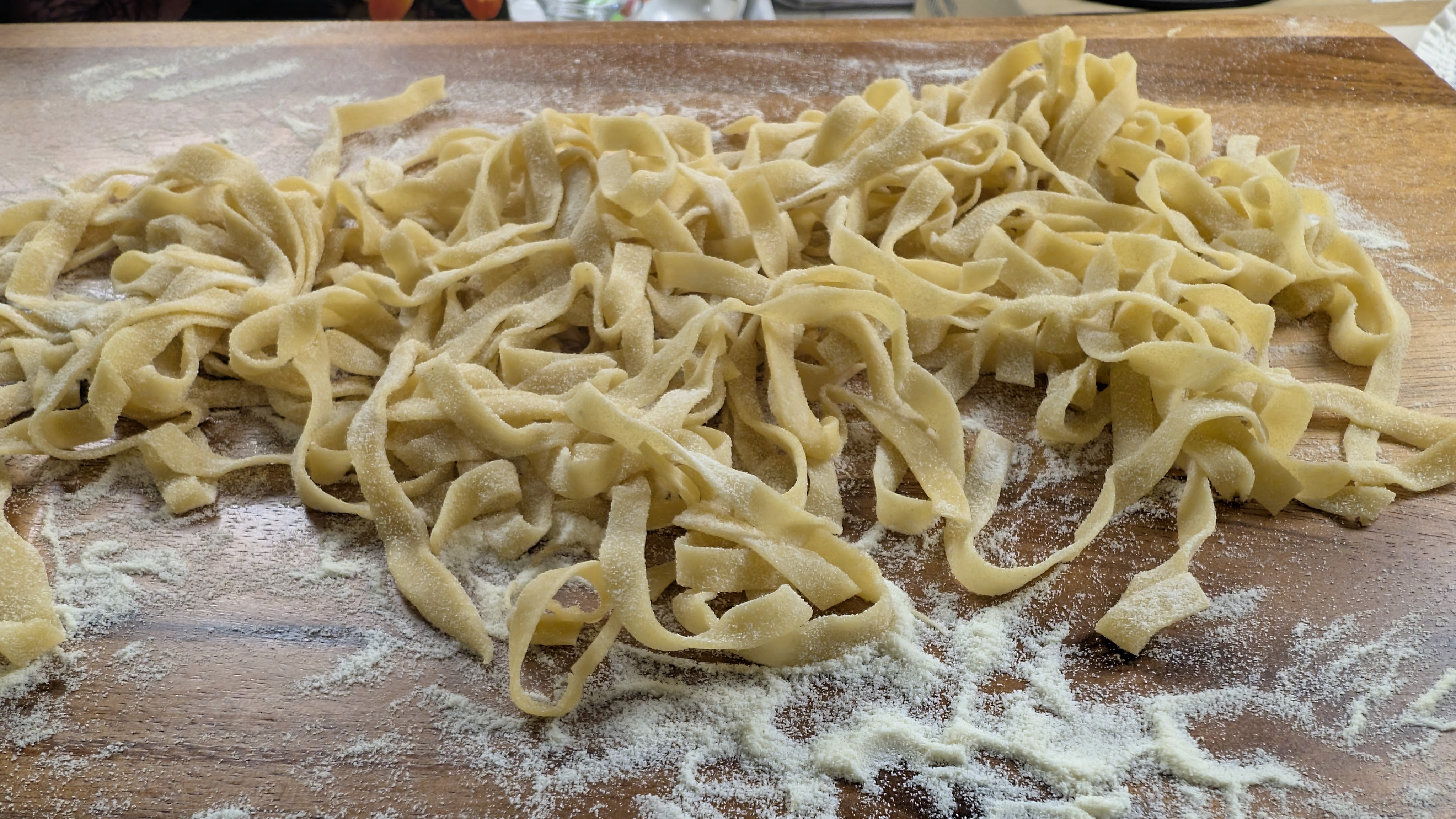
There’s something incredibly satisfying about making pasta from scratch – it’s a hands-on, flour-dusted experience that brings Italian traditions into your kitchen. This basic egg pasta dough uses a simple combination of all-purpose flour, semolina, and fresh eggs to create a supple and flavorful dough that can be rolled into silky fettuccine, lasagna sheets, or delicate tagliatelle. Whether you’re a seasoned pasta maker or a curious beginner, this recipe is a perfect foundation to build your pasta adventures on.
The general rule is 1 large egg to every 100g (3.5 oz) of flour which is enough for one person.
Ingredients
- 400 g all-purpose flour
- 100 g semolina flour
- 1 tsp salt
- 5 large eggs
Instructions
🥚 1. Make the Dough
- On a clean work surface, combine the all-purpose flour and semolina flour. Add salt and mix lightly.
- Semolina flour imparts a subtle nutty flavor to pasta. This flavor complements a wide range of sauces and seasonings, making it a versatile ingredient. The robust flavor of semolina flour enhances the overall culinary experience. The coarse nature of semolina flour creates a rough surface that allows sauces and toppings to adhere better. This results in a more flavorful and satisfying pasta experience.
- Form a well in the center and crack the eggs into the well.
- Use a fork to whisk the eggs, gradually drawing in flour from the sides.
- Switch to a bench scraper and begin folding and cutting the flour into the egg mixture.
- When it becomes too stiff to work easily, divide the dough in half and knead each piece separately.
- Knead each portion for about 7–8 minutes until elastic. Let the dough (and your hands!) rest for 10 minutes, then knead again for 2 more minutes until smooth.
🧊 2. Rest the Dough
- Wrap each dough ball in plastic wrap and let it rest for 30–40 minutes at room temperature.
🍝 3. Roll the Dough
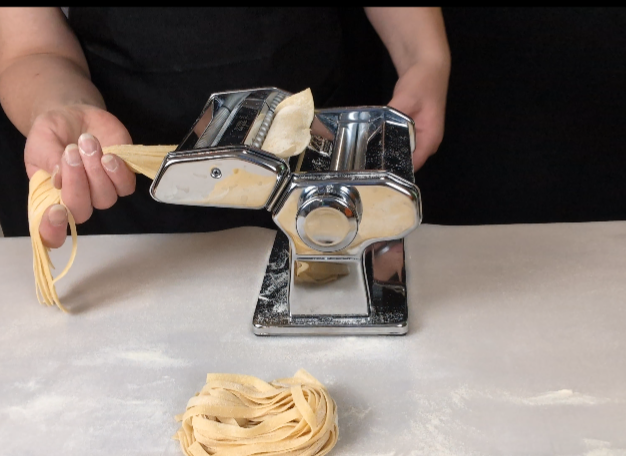
- Secure your pasta machine to a clean surface. Lightly dust the surface and dough with semolina or durum flour.
- Cut off a tennis-ball-sized piece of dough, flatten it with your hands, and roll it through the widest setting (usually “0”) three times, folding in between if needed.
- Move to setting “3” and roll the dough through three more times, dusting as needed.
- Cut in half
- Roll through setting “5” or “6”, depending on how thin you want the pasta.
- Cut into pieces 14-15 inches long.
- Flour the sheets lightly, then feed them through your cutter attachment for fettuccine or desired shape.
✅ 4. Cook or Store
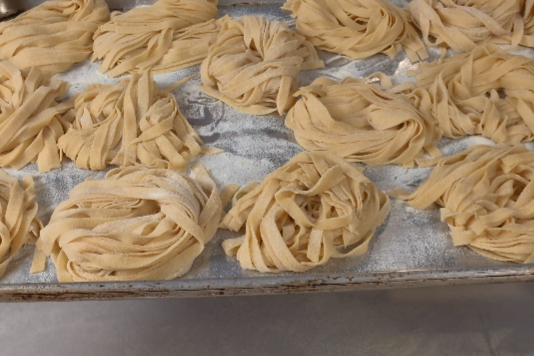
- Use immediately or dust with flour and let the pasta dry slightly before storing or freezing.
🧀 Serving Suggestions
- Serve fresh fettuccine with a simple butter-sage sauce or a hearty Bolognese.
- Layer sheets for homemade lasagna.
- Try thinner cuts for tagliolini with lemon and olive oil.
❄️ Storage Tips
- Fresh dough: Wrap and refrigerate for up to 2 days.
- Rolled pasta: Air-dry for 1 hour and refrigerate for 2–3 days or freeze for up to 1 month.
- Cooked pasta: Best served fresh, but leftovers can be stored in an airtight container for 2–3 days.
🔁 Variations & Substitutions
- Flours: Swap semolina for whole wheat, or 00 flour for a different texture.
- Eggs: Use 6 small eggs or 4 extra-large if needed.
- Vegan: Replace eggs with pureed cooked pumpkin or beets for a fun twist (note: this will result in a less elastic texture).
❓ FAQ
Can I use a stand mixer instead of kneading by hand?
Yes! Use the dough hook on low speed for 7–8 minutes until smooth, then knead briefly by hand to finish.
Why is my dough too dry or too wet?
Humidity affects flour. Add a teaspoon of water at a time if too dry, or sprinkle more flour if too sticky.
Can I make this dough ahead of time?
Yes. The dough can be made 1 day in advance and stored in the fridge. Let it come to room temperature before rolling.
🍝 Domaće Testo za Testeninu sa Jajima
Savršeno glatko, elastično testo – pravi klasik italijanske kuhinje.
Uvod
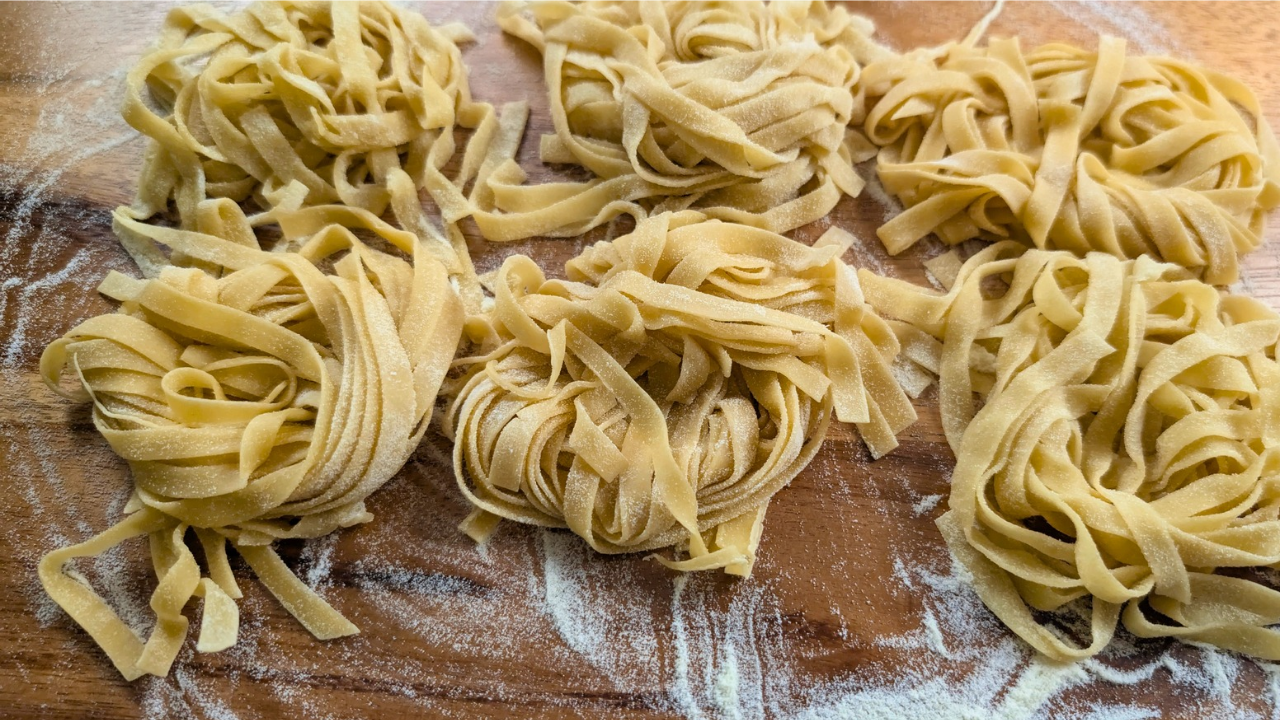
Pravljenje domaće paste je iskustvo koje vraća u detinjstvo i evocira mirise italijanskih kuhinja. Ova osnovna verzija testa sa jajima je napravljena od samo nekoliko jednostavnih sastojaka – univerzalnog brašna, semolina brasna i jaja – i savršena je za fettuccine, lazanje, tagliatelle ili ravioli. Ručno ili uz pomoć mašine za pastu, dobićete prelepo elastično testo koje je uživanje raditi.
Semolina se najčešće koristi u Italiji i okolnim regijama za pripremu testenina zbog čega se ova vrsta brašna i popularno naziva brašnom za testenine ili brašnom za makarone. Omiljena je zbog izuzetno visokog sadržaja glutena što omogućuje formiranje različitih oblika i veličina paste i zadržavanje oblika tokom toplotne obrade. Takođe testeninama daje karakterističnu žutu boju čak i kada u svom sastavu ne sadrže jaja.
Sastojci
- 400 g glatkog brašna (tip 400)
- 100 g semoline (mlevenjem durum pšenice dobijemo oštro brašno bledožute boje poznato kao semolina.)
- 1 kašičica soli
- 5 velikih jaja
Uputstvo
🥚 1. Priprema testa
- Na radnoj površini pomešajte brašno, semolina brasno i so.
- Napravite udubljenje u sredini i razbijte jaja.
- Viljuškom umutite jaja i postepeno dodajte brašno.
- Pređite na strugač i počnite da spajate testo.
- Ako je testo teško za rad, podelite ga na pola i mesite deo po deo.
- Mesite oko 7–8 minuta dok ne postane glatko. Odmorite ruke i testo 10 minuta, pa još 2 minuta dodatnog mešenja.
🧊 2. Odmaranje testa
- Uvijte testo u plastičnu foliju i ostavite da odmori 30–40 minuta na sobnoj temperaturi.
🍝 3. Razvlačenje testa
- Učvrstite mašinu za pastu na sto. Površinu i testo pospite grizom.
- Uzmite lopticu veličine teniske loptice, rastanjite rukama i provucite kroz najšire podešavanje (obično “0”) tri puta.
- Zatim pređite na podešavanje “3” i provucite testo tri puta.
- Isecite testo na pola radi lakšeg rukovanja.
- Završite sa podešavanjem “5” ili “6” za tanku pastu.
- Isecite trake na 35 cm duzine.
- Testo pospite brašnom i ubacite u rezač za fettuccine ili oblik po izboru.
✅ 4. Kuvanje i čuvanje
- Koristite odmah ili ostavite da se prosuši 1 sat pre čuvanja u frižideru ili zamrzivaču.
🧀 Predlozi za serviranje
- Fettuccine sa sosom od putera i žalfije.
- Slojevi za domaće lazanje.
- Tagliatelle sa maslinovim uljem i limunom.
❄️ Kako čuvati
- Sirovo testo: Čuvati umotano u frižideru do 2 dana.
- Razvučeno testo: Sušiti 1 sat, pa čuvati u frižideru 2–3 dana ili zamrznuti do 1 meseca.
- Skuvana pasta: Najbolja je sveža, ali se može čuvati 2–3 dana u frižideru.
🔁 Zamene i varijacije
- Brašno: Koristite 00 brašno za finiju strukturu.
- Jaja: Možete koristiti 6 manjih jaja ili 4 ekstra velika.
- Bez jaja: Umesto jaja probajte pire od bundeve ili cvekle (tekstura će biti drugačija).
❓ Česta pitanja
Mogu li koristiti mikser umesto ručnog mešenja?
Da! Koristite spiralni nastavak i mesite 7–8 minuta na niskoj brzini, pa završite kratkim ručnim mešenjem.
Zašto mi je testo suvo/lepljivo?
Zavisi od vlage u brašnu. Dodajte po malo vode ako je suvo, ili još brašna ako je previše lepljivo.
Mogu li pripremiti testo unapred?
Naravno. Testo može stajati u frižideru 1 dan, ali ga izvadite na sobnu temperaturu pre razvlačenja.
 Divna's Baked Goods