There is something deeply nostalgic and beautiful about dyeing Easter eggs with onion skins. Long before artificial colors became popular, families across the Balkans used simple, natural ingredients to create rich, earthy tones and delicate leaf patterns.
This method is not just about coloring eggs – it is about tradition, patience, and celebrating nature.
🕰️ Tradition & History
Dyeing eggs for Easter dates back centuries and symbolizes new life and rebirth. In many Eastern European and Balkan cultures, the first egg is traditionally dyed red and kept in the home as a symbol of protection and prosperity.
Using onion skins (lukovina) is one of the oldest natural dyeing techniques. It was widely used because it was accessible, safe, and produced warm reddish-brown tones that resemble natural pigments found in nature.
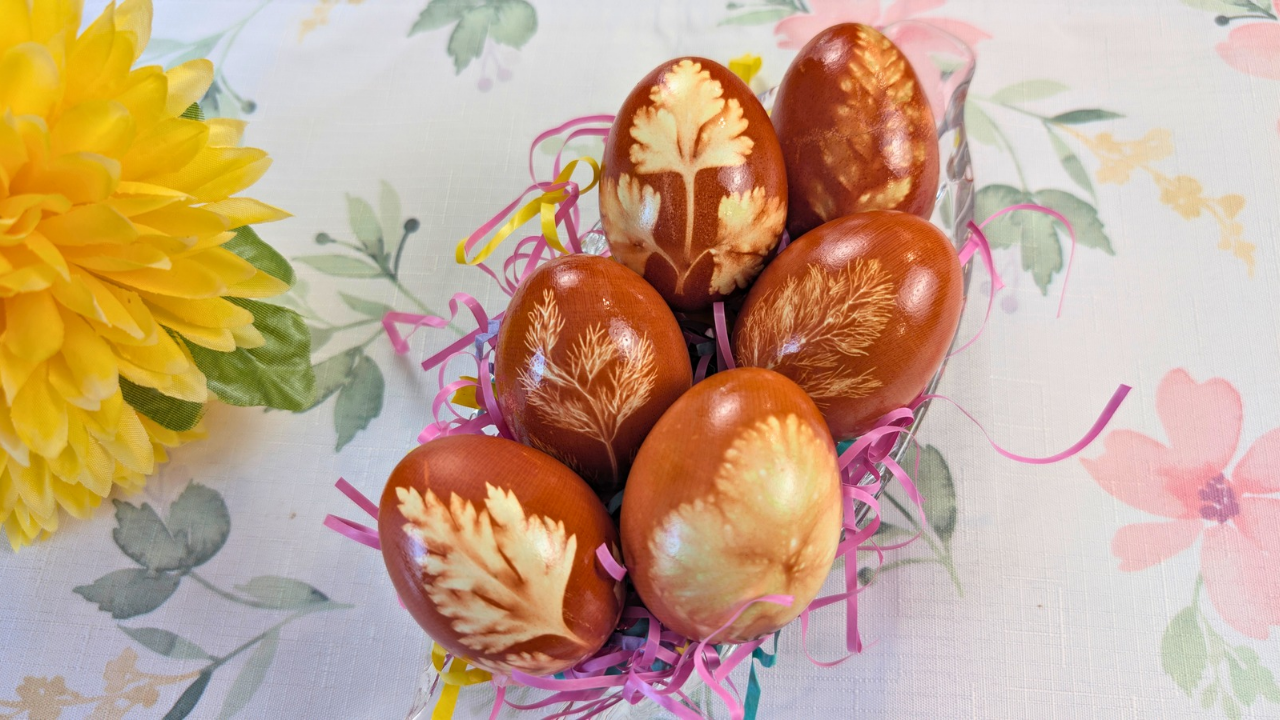
Decorating eggs with leaves pressed against the shell is also a traditional technique, creating unique botanical prints—each egg becomes one of a kind.
🧺 Ingredients
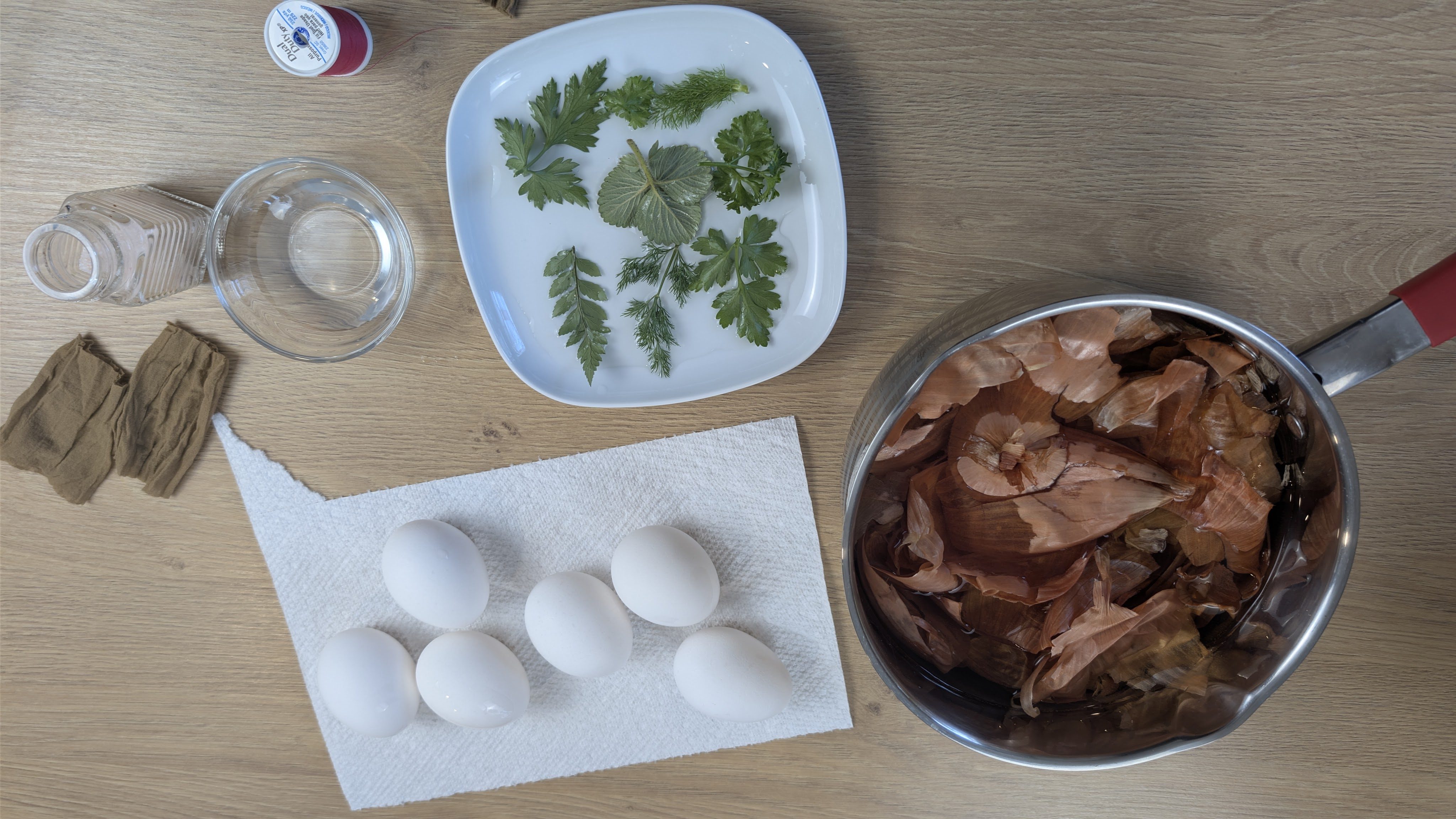
- 2–3 handfuls onion skins
- 1-1.5 L water
- White eggs (optional, for stronger contrast)
- Small leaves and herbs
- Old nylon stockings
- 1 tsp salt
- 2 tbsp vinegar
- A little oil (for shine)
🍳 Instructions
Preparing the Dye
Soak the onion skins in hot water a day before. The longer they sit, the deeper the color will be. This step is key to a rich, natural dye.
Prevent Cracking
Take eggs out of the fridge ahead of time and wash them. Sudden temperature changes can cause cracking. Add salt and vinegar to enhance the color.
Decorating the Eggs
Wet the leaves, place them on the eggs, wrap them tightly in nylon stockings, and tie. This creates beautiful natural patterns.
Cooking
Layer onion skins on the bottom of a pot, add eggs, and cover with more skins. Cook gently. Once boiling, simmer for about 10 minutes. For deeper color, leave eggs in the dye longer.
Final Touch
After cooking, remove the stockings and leaves. Rub with a little oil for a beautiful shine.
💡 Tips
- Leave eggs overnight for deeper tones
- Use different leaves for unique patterns
- Brown eggs give warmer tones, white eggs give contrast
🥚 Serving & Storage
Display them in a basket for Easter or use them as a natural table centerpiece. Store in the refrigerator and consume within a few days.
🌿 Farbanje jaja u lukovini – prirodan način
Farbanje jaja u lukovini je jedan od najlepših i najstarijih običaja koji se prenosi generacijama. Bez hemikalija, uz jednostavne sastojke iz kuhinje, dobijaju se prelepe prirodne boje i unikatne šare.
🕰️ Tradicija i istorija
Uskršnja jaja simbolizuju novi život i vaskrsenje. U mnogim domaćinstvima prvo jaje se farba u crveno i čuva kao čuvarkuća.
Lukovina se koristila jer je bila dostupna svima i davala je toplu, prirodnu boju. Dekorisanje listićima biljaka potiče iz starih vremena kada su ljudi koristili prirodu kao inspiraciju za ukrašavanje.
🧺 Sastojci
- 2–3 šake ljuski od crnog luka
- 1-1.5 L vode
- bela jaja (po želji)
- listići biljaka i travke
- stare najlon čarape
- kašičica soli
- 2 kašike sirćeta
- malo ulja
🍳 Priprema
Priprema lukovine
Ljuske potopiti u vruću vodu dan ranije. Što duže stoje, boja će biti intenzivnija.
Trik da jaja ne pucaju
Izvaditi jaja ranije iz frižidera i oprati ih. Dodati so i sirće u vodu.
Kako šarati jaja
Pokvasiti listiće, prilepiti ih na jaje, staviti u čarapu i vezati.
Kuvanje
Na dno šerpe staviti lukovinu, poređati jaja i prekriti. Kuvati lagano. Kada provri, kuvati još oko 7-10 minuta. Za jaču boju ostaviti duže u vodi.
Završni trik
Skinuti čarapu i listiće, pa premazati uljem za sjaj.
💡 Saveti
- Ostavite jaja duže za tamniju boju
- Koristite različite biljke
- Bela jaja daju jači kontrast
🥚 Čuvanje
Čuvati u frižideru i potrošiti u roku od nekoliko dana.
 Divna's Baked Goods